
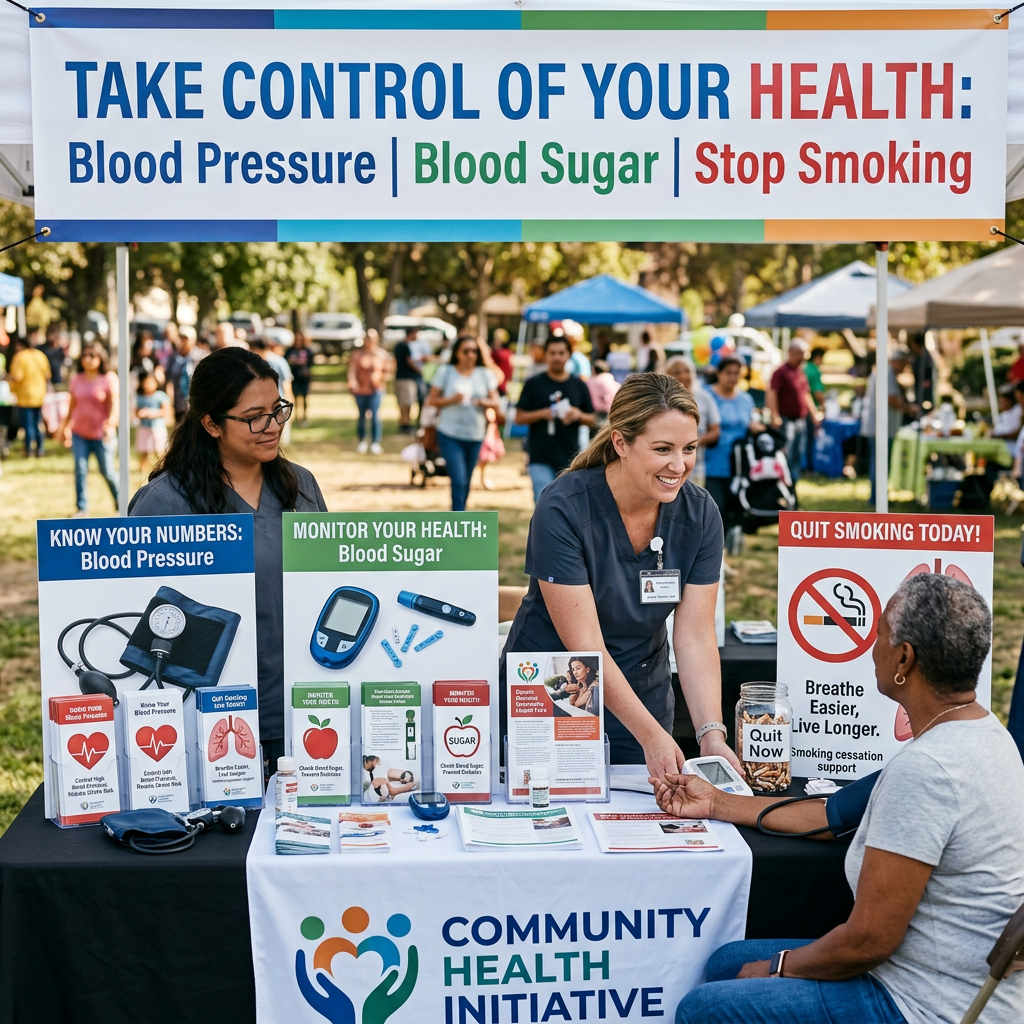
Maybe you’re already managing high blood pressure, or watching your blood sugar, or you’ve been meaning to quit smoking for a while now. Or maybe none of that is your reality yet, and dementia feels like a “someday, not now” kind of worry. Either way, this one’s for you.
Here are the 3 things, straight away, no burying the lede:
- Manage your blood pressure
- Check your blood sugar
- Stop smoking
A new study found something worth sitting with: people who had all three of those in check stayed dementia-free for about 13 more years than people who didn’t. Thirteen more years of clearly being you — showing up to your life, recognizing your people, making your own decisions.
And here’s the part I want to lead with, because it’s easy to miss: this isn’t just a dementia study. These same three things drive heart disease risk, energy crashes, weight that won’t budge, and how you feel getting through an ordinary Tuesday. Working on them pays you back in more ways than just brain health down the road — it pays you back this year, this month, this week.
What they actually did
Researchers followed over 12,400 people for 26 years, starting when they were 55 and dementia-free. Along the way, they tracked three things: blood pressure, blood sugar (diabetes), and whether someone smoked. Not exotic stuff. The same three things your doctor has probably mentioned more times than either of you can count.
People with none of those three risk factors at 55 stayed dementia-free for about 30 more years, on average. People with all three — only about 17.5 years. That’s the 13-year gap.

Why I actually like this study
A lot of dementia research lands in your inbox feeling like a life sentence — genetics you can’t change, a diagnosis you can’t see coming. This one is different. All three factors here are things you have some real influence over, starting today, not “someday when things calm down.” That’s the hopeful part. This isn’t a locked door. It’s a lever you can actually put your hand on — whether you’re managing one of these already or just starting to pay attention.
The part I want to be straight with you about
The study also found that women had more dementia-free years than men at every level of risk. When I first read that, I wanted to turn it into a girl-power moment — “see, our habits are paying off!” But I sat with it and realized I don’t actually know that, and neither does the study. It didn’t test why women did better. It could be biology. It could be how dementia gets diagnosed differently by sex. It could be a dozen things nobody’s isolated yet. So I’m not going to hand you a tidy explanation I don’t have.
Here’s what I do think is worth saying plainly, though: the same data showed a bigger gap by race than by sex. White participants had roughly 19.6 dementia-free years; Black participants had roughly 16.0 — about a 3.6-year gap, wider than the 1.5-year difference between women and men. If I only told you the flattering half of this story, I’d be leaving out the part that actually matters more.
What that tells me is that the 13-year number isn’t sitting there waiting equally for anyone who manages their blood pressure. Access to care, to diagnosis, to the very conditions that let someone manage diabetes or quit smoking in the first place — none of that is distributed evenly. Better health for more of us means closing gaps like that, not just optimizing our own individual numbers and calling it done.
Start where you are — one action today
You don’t have to fix all three this month. Pick the one that’s already nagging at you.
If blood sugar is your biggest question mark — if you crash hard after lunch, or you’ve wondered whether your energy dips are “just midlife” or something more — that’s actually the easiest one to get a real, immediate read on. I built a free 2-minute Metabolic Flexibility Quiz that walks through your energy, hunger, sleep, and blood sugar patterns and gives you an instant personalized result. No email, no waiting — you get your score the second you finish. It’s not a diagnosis, it’s a starting point: a clear picture of where things stand today, so you know exactly where to focus.
👉 Take the quiz: https://healandflourish.com/metabolic-flexibility-questionnaire/
If blood pressure is the one you’ve been putting off, that’s a phone call to get it checked — today, not “next time I’m at the doctor anyway.” If smoking is the one, that’s one conversation with someone who can help you build an actual plan, not aim for perfection overnight.
Whichever one you pick, that’s the whole ask. One thing, starting now.
💾 Save this — for the days you need the reminder that this is still worth doing.
A note on the research: this was an observational study (the ARIC cohort, if you want to look it up), which means it shows an association, not proof that fixing these three things guarantees anyone an extra 13 years. Risk factors were also measured only once, at the start, so it doesn’t capture people who improved their health over time. It’s solid, long-running research — but like any single study, it’s one piece of a bigger picture, not the final word.